Waterdrop WD-17UA Reviews: See Why 0 Shoppers Rated It 0 Stars!
Is the Waterdrop WD-17UA water filtration system really worth its 0/5? We looked at what 0 buyers are saying — from praise to complaints on these Waterdrop Filters water filtration systems.
 Supermod
 Moderator
 Recaptor
Waterdrop WD-17UA Review: Compact Under-Sink Filtration That Punches Above Its Price
The Waterdrop WD-17UA is an under-sink water filter that aims to deliver cleaner, better-tasting water without the bulk or fuss of a complete reverse-osmosis system. On paper, this compact unit leans on a multi-stage cartridge to knock out chlorine taste, common heavy metals, and even PFAS; all while keeping installation simple and maintenance infrequent. Suppose you're shopping for an affordable upgrade for a staff kitchen, apartment, RV, or home office. In that case, this review of the Waterdrop WD-17UA should help you decide whether its mix of capacity, performance, and cost aligns with your needs.
Detailed Specs & Features
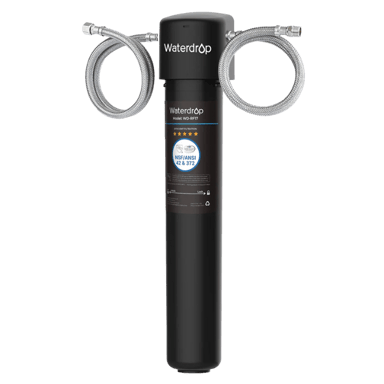
At its core, the WD-17UA is, no surprise, a Waterdrop Filters product identified as the Waterdrop WD-17UA, positioned as an under-sink filter in the company's WD series. It's designed for broad use cases: residential kitchens, office pantries, and RVs, so the spec sheet emphasizes flexibility rather than niche specialization. The body is slim (3.6 inches wide, 3.85 inches deep, and 19.1 inches tall), which makes it easy to tuck against a cabinet wall, and the system is intended for under-sink installation with basic DIY tools.
Filtration is where things get interesting. The system uses a multi-stage design built around three stages and a blend of media: sediment filtration, activated carbon block, and KDF. According to the spec sheet, its filtration technology targets chlorine, VOCs, heavy metals (including lead and mercury), and PFAS compounds like PFOA/PFOS. A fine 0.5-micron rating on the sediment layer points to effective capture of particulate matter that can cloud water or damage appliances downstream.
Capacity and speed are solid for the format. The system is rated for a 0.75 gpm flow rate, which should feel close to a standard faucet when running cold water. The big headline, though, is longevity: a 24,000-gallon cartridge capacity is generous, and the brand positions it for a 3-4 person household or a small team kitchen. Water quality constraints are typical for an activated-carbon system: it's best suited to municipal tap water up to a 500 TDS maximum, not well water with heavy sediment or biological load.
Because the WD-17UA isn't an RO unit, it doesn't need electricity or a pump. It relies purely on line pressure and is certified where it counts: the spec sheet lists NSF/ANSI 42 and 372, which speak to chlorine taste/odor reduction and lead-free materials. The warranty is modest but standard for the class: a limited warranty with 1-year coverage on parts and the same on labor.
User Experience & Performance (Based on Specs)
Design & Build
The WD-17UA's design reads practical and compact. The tall, slim cartridge helps it slip into spaces where chunkier under-sink canisters don't fit. The stated clearance requirement of 21.5 inches is reasonable for most sinks, and the quick-connect fittings should keep DIY installation close to the quoted 30 minutes. The finish is matte, the housing is primarily plastic, and the valves are stainless steel; suitable for a lightweight, corrosion-resistant build. While there's no tool-free cartridge swap, the threaded seal and standard O-ring setup are familiar territory for anyone who's changed a filter before.
One thing to flag: the provided pressure specs list a "minimum" of 100 psi and a "maximum" of 10 psi. Those look inverted relative to typical plumbing reality. In everyday terms, municipal water is usually somewhere around 40-80 psi; 100 psi is often considered a top end rather than a minimum. Meanwhile, 10 psi is not enough pressure to run a faucet. In other words, it's likely a simple labeling mistake on the sheet. If you're installing in an older building or an RV, you'll still want to verify your line pressure and consider a regulator if you're near the high end.
Performance
On paper, the WD-17UA should be a noticeable upgrade for taste and basic contaminant reduction. The 0.5-micron sediment layer and carbon block are a classic tag team: the sediment filter catches grit and rust; the carbon block adsorbs chlorine, certain VOCs, and the metal ions noted in the spec list. The claimed reductions for lead, mercury, arsenic, and copper are ambitious for a non-RO system. Still, the inclusion of KDF media supports the heavy-metal claims in treated, chlorinated water supplies. If your main complaint is "my water smells like a swimming pool" or you're looking to reduce PFAS exposure from municipal water, the specifications suggest this system is a fit.
Flow is a strong suit. A 0.75 gpm rating means you won't be drumming your fingers waiting on a glass to fill, and because there's no holding tank, you get continuous, on-demand filtration. The trade-off compared to RO is that TDS won't drop dramatically, minerals remain in the water (which many people prefer for taste), and extremely fine dissolved contaminants aren't addressed the same way a membrane would. But for day-to-day coffee, tea, cooking, and hydration, the WD-17UA's focus on chlorine, taste, and common metals hits the needs of most city-dwelling users.
Ease of Use & Maintenance
Maintenance looks refreshingly low-touch. There's no app, no LED indicator, and no extra power cord to tidy. You simply replace the cartridge when it approaches its life. The datasheet lists a 24,000-gallon capacity and mentions a "24,000 liter/month" lifespan, which appears to be a units mix-up. Realistically, most households change a high-capacity carbon cartridge every 6-12 months based on water quality and consumption. Without a built-in life indicator, the best practice is to set a reminder based on your use or monitor taste and flow.
Because it's a straightforward, pressure-driven filter, the WD-17UA should be nearly silent in use; no pump hum, no solenoids clicking, just water flowing. And with a supported inlet temperature up to 100 °F, it's fine for cold and room-temperature lines (as intended). If you want chilled or hot dispensing, you'll need an add-on faucet or separate appliance; the unit itself focuses on filtration rather than temperature control.
What's Missing
There's no remineralization stage, which is perfectly fine for most users but worth noting if you're chasing a specific taste profile. There's also no chloramine claim on the sheet; if your utility uses chloramine rather than chlorine, a specialized cartridge is typically required for best results. Finally, without a bypass valve or tool-free replacement, service requires a brief shutoff and a screwdriver. None of these are deal breakers at this price, but they're the types of small conveniences you'll find as you move up the range.
Pros & Cons
Pros
- Slim, compact under-sink form factor that's easy to fit in tight cabinets.
- Three-stage filtration (sediment, carbon block, KDF) with 0.5-micron particulate capture.
- Strong 0.75 gpm flow keeps dispensing snappily compared to tank-based systems.
- High 24,000-gallon cartridge capacity suitable for 3-4 users or a small office pantry.
- NSF/ANSI 42 and 372 indicate credible chlorine taste/odor reduction and lead-free materials.
Cons
- Spec sheet pressure limits appear inverted; confirm actual operating range before install.
- No filter-life indicator, bypass valve, or tool-free cartridge replacement.
- No explicit chloramine reduction claim; may not be ideal for utilities using chloramine.
Price & Value for Money
Affordability is a big part of the WD-17UA's appeal. At the time of writing, we've seen it listed for $76.99 at WaterdropFilter.com, which is aggressive for a three-stage, high-capacity cartridge in a compact chassis. When you stack that price against the rated 24,000 gallons, the cost-per-gallon looks very favorable, especially for households or small offices that churn through a lot of drinking water. If you're comparing against entry-level RO, remember that while RO can remove a broader spectrum of dissolved solids, it adds complexity, a storage tank, potential wastewater, and filter sets that can be pricier over time. For users prioritizing taste, chlorine reduction, and basic metal/VOC control in city water, the WD-17UA's value proposition is strong.
Who should buy it? Renters and homeowners who want an easy, fast-flowing upgrade to tap water without the maintenance overhead of RO. Who might skip it? Anyone on untreated healthy water, users facing heavy chloramine levels, or buyers who want smart indicators and hands-off maintenance reminders.
Quick Take
The Waterdrop WD-17UA delivers a lot of filtration per dollar, with quick installation and a cartridge that's built to last. It's not trying to be RO, and that's the point: fewer parts, less complexity, and no power required. If you want cleaner-tasting water from a tidy under-sink setup, the specs make a compelling case.
Closing Recommendation
Based on the specifications and claimed reductions, the WD-17UA looks like a smart pick for apartments, condos, RVs, and office pantries where chlorine taste, basic metals, and PFAS are the primary concerns. It's compact, budget-friendly, and fast at the tap. Just verify your pressure, set a reminder for filter changes, and enjoy the simplicity of a pressure-powered, multi-stage filter.
Verdict
Rating: Based on the specifications and overall feature set, we believe Waterdrop WD-17UA deserves 4.3 out of 5.
- Winner Feature => Multi-stage, 0.5-micron filtration with 24,000-gallon capacity at a very low price.
- Needs Improvement => Clarity on operating pressure and a basic filter-life indicator would boost usability.
Reviews 0
The good, the bad, and the brutally honest.Average Rating


More Water Filtration Systems 666
Unlock more awesome finds.